
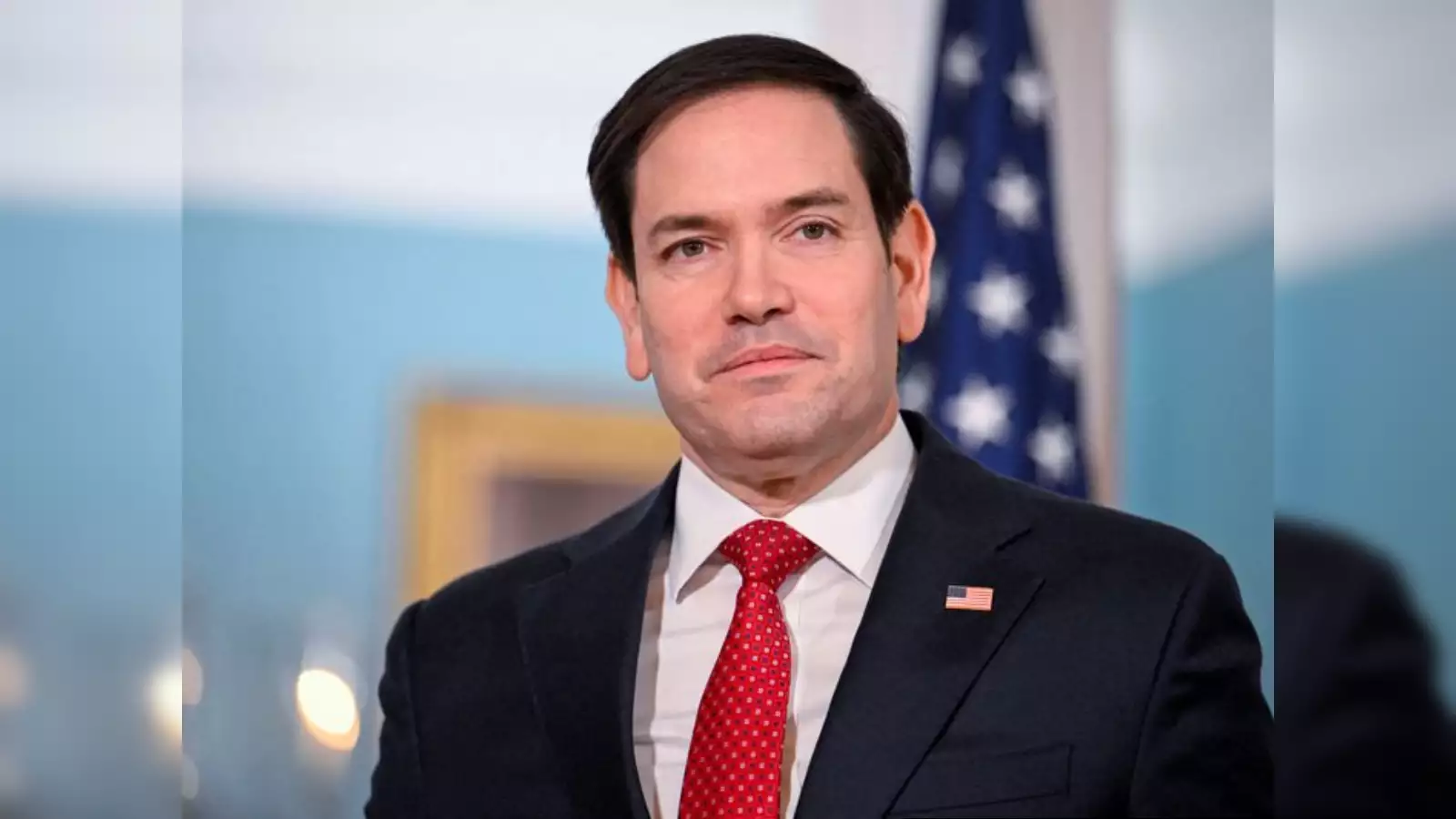
Marco Rubio is an American politician, attorney, and diplomat who has served as the 72nd Secretary of State since 2025. His parents were not U.S. citizens when he was born.
A prominent Cuban American Republican has carved out a significant role in U.S. politics, rising from local office to one of the most influential figures in foreign policy.
Before entering public service, he earned a Juris Doctor from the University of Miami. His political career began in the late 1990s as a city commissioner in West Miami, followed by election to the Florida House of Representatives in 2000.
He ascended to Speaker of the Florida House in 2006 and served until term limits ended his tenure in 2008.
His national profile surged in 2010 when he won a U.S. Senate seat in a three-way race, defeating Democratic and establishment Republican candidates.
As a senator, he quickly became known for his hawkish foreign policy stances, particularly on Latin America and China. His criticism of the Chinese Communist Party led to Beijing’s sanctions in 2020, which barred him from entering the country.
Rubio solidified his position as Florida’s senior senator, winning reelection to the Senate in 2016 and 2022. In 2024, President-elect Trump nominated Rubio for Secretary of State, a role he assumed in January 2025 after unanimous Senate confirmation.
Additionally, he serves as Acting Administrator of USAID and Acting Archivist of the United States. He is the first Hispanic Secretary of State and the highest-ranking Hispanic American official in U.S. history.
Marco Rubio’s Parents: The True Journey of Cuban Exiles Who Shaped a Senator
Marco Rubio was born in Miami, Florida, on May 28, 1971, to Cuban immigrant parents, Mario Rubio Reina and Oriales Rubio.
His father worked as a housekeeper at the Imperial Palace Hotel and Casino, while his mother was a cashier, a maid, and a stock clerk at Sam’s Town Hotel.
They were never rich and never made it big. However, they were successful because they made all the things that had been impossible for them possible for their children.
When they were young, my parents had big dreams for themselves. But because they were not born into wealth or power, their future was destined to be defined by their past. So in 1956 they came here, to the one place on earth where the aspirations of people like them could be more than just dreams.
His parents left Cuba during the regime of Fulgencio Batista and settled in the U.S. in 1956, two and a half years before Fidel Castro came to power in the Cuban Revolution (1959).
Despite claims that they fled Castro’s regime, immigration records confirm their earlier arrival. Interestingly, Oriales made at least four return trips to Cuba after Castro’s takeover, including a month-long stay in 1961.
Rubio’s maternal grandfather, Pedro Victor Garcia, legally immigrated to the U.S. in 1956 but returned to Cuba in 1959 seeking work.
When he attempted to return to America without a visa, he was detained as an undocumented immigrant and faced deportation.
At Marco’s birth, neither of his parents was a U.S. citizen, reinforcing his deep-rooted Cuban-American heritage.
Tragically, Oriales Rubio passed away on September 27, 2019, at the age of 88.
My mother Oria Rubio returned to be with the Lord on Friday night. God blessed her with almost 89 years of life filled with love and with a peaceful death surrounded by those who loved her.
The Rubio Siblings: A Close-Knit Family with a Star-Studded Legacy
Marco Rubio grew up in a close-knit family with his older brother Mario, older sister Barbara, and younger sister Veronica Rubio.
Barbara, 12 years his senior, met her future husband, Orlando Cicilia, during their high school years.
Cicilia became known for hosting festive Nochebuena celebrations at his Kendall home. These celebrations featured a traditional farm-style feast complete with lechón roasted over coals.
On the other hand, Veronica Rubio pursued a career in the arts, establishing herself as an American actress and photographer.
She was first married to Carlos Ponce, a renowned Puerto Rican actor and musician, from 1996 to 2010. Together, they had four children before their divorce.
Following her split from Ponce, Veronica found love again with Christian Joseph Boulos, with whom she welcomed two more children: Anthony and Jayla Boulos.
