
Warning: this article contains heavy spoilers for every film discussed. Read no further until you have seen these movies — or are comfortable knowing how they end.
Some movie endings tie everything in a neat bow. Others leave the audience staring at the credits in silence, arguing in the parking lot about what they just watched. This guide to movie endings explained breaks down ten of the most confusing finales in modern cinema. Below, every movie ending explained gets the same treatment: a spoiler-labeled recap, the leading interpretations, and what the filmmakers have actually said.
Why Do Movie Endings Confuse Us? Decoding Cinema’s Toughest Finales
Directors are rarely ambiguous by accident. Christopher Nolan has said his brother Jonathan once warned him that explaining Memento would destroy its power. So Nolan stopped explaining endings entirely. A puzzle finale turns viewers into detectives hunting for clues scattered through the film.
The unreliable narrator (Shutter Island) makes us doubt everything we saw. The time loop (Donnie Darko, Interstellar) asks us to hold paradoxes in our heads at once. Sometimes the confusion is philosophical — the film asks not what happened but what it means.
1. Inception Ending Explained: Did the Spinning Top Fall?
Dom Cobb (Leonardo DiCaprio) returns home, spins his spinning-top totem to test whether he is awake — then walks away to hug his children without watching the result. The camera holds on the wobbling top — and the film cuts to black before it falls.
Reading A — it doesn’t matter. The dominant reading, and the one Nolan endorses: Cobb’s arc completes the moment he turns away from the top — he has chosen the reality where he is with his children. As Nolan said in 2023: “The point of the shot is the character doesn’t care at that point.”
Reading B — it’s reality. The top audibly wobbles on camera, and fans note that Cobb’s wedding ring appears only in dream scenes.
Reading C — it’s still a dream. The top was Mal’s totem, not Cobb’s, and the published screenplay’s stage direction reads “The top is STILL SPINNING.”
Nolan has said the ambiguity “is not an emotional ambiguity. It’s an intellectual one for the audience.” The wobble is real, the screenplay says “still spinning,” and neither proves anything. (Source: StudioBinder) For more Hollywood what-ifs, see our piece on actors who were almost cast in iconic movie roles.
2. Interstellar Ending Explained: The Tesseract and the Ghost
Cooper (Matthew McConaughey) falls into the black hole Gargantua and wakes inside the tesseract, built by future humans, which shows his daughter Murph’s bedroom at every moment in time. Realizing he was Murph’s childhood “ghost,” he transmits quantum data to her wristwatch in Morse code. Murph decodes it, solves the gravity equation, and humanity launches its survival stations.
Brand (Anne Hathaway) voices the emotional thesis: love is “the one thing we’re capable of perceiving that transcends dimensions of time and space.” The science comes from Kip Thorne, the Nobel-winning physicist who consulted on the film. His ground rule: nothing should break the rules of physics; all speculation had to grow from real science. In a widely shared 2025 clip, Thorne walked viewers through the rescue inside Gargantua.
The bootstrap paradox stays unresolved by design: the “beings” who built the wormhole are humanity’s own descendants, ensuring their own past. (Source: LADbible)
3. The Prestige Ending Explained: The Machine and the Twins
Rival Victorian magicians Robert Angier (Hugh Jackman) and Alfred Borden (Christian Bale) sabotage each other for years. Angier, bankrolled by a fictionalized Nikola Tesla, perfects his “Transported Man”: each night, the machine creates a second Angier while the original drowns in a water tank. Meanwhile, Borden is not one man but two — identical twins sharing one identity, one posing as the stagehand “Fallon.” After Angier frames Borden for murder and one twin is hanged, the survivor shoots the last Angier and reclaims his daughter.
Reading 1 — the machine duplicates. There is no teleportation; the warehouse of tanks is the literal proof. The Angier who drops each night drowns, and the clone takes the bow.
Reading 2 — devotion beats technology. Borden’s trick needs no science at all. Twinship, discipline, and total commitment to the craft win over machinery. The film is really a fable about devotion versus vanity.
One detail stays deliberately unknowable: which version of Angier survives each night. Angier himself says it took courage to step in “not knowing if I’d be the man in the box or the man in the prestige.” As Nolan said in 2006: “I think the film works very well a second time… we played very fair and were very honest about our deceptions.” (Source: PrimeTimer)
4. Shutter Island Ending Explained: “Which Would Be Worse?”
U.S. Marshal Teddy Daniels’s (Leonardo DiCaprio) investigation at the Ashecliffe asylum collapses into the truth: he is Andrew Laeddis, a patient who murdered his wife after she drowned their three children. The “investigation” was role-play therapy staged by the staff. In the final scene he asks: “Which would be worse: to live as a monster, or to die as a good man?” Then he walks off with the orderlies toward a lobotomy.
Reading A — he chose it. His moment of clarity was real. Knowing he can never live with his guilt, he pretends to have slipped back into delusion so the doctors lobotomize him. This is supported by Professor James Gilligan, the NYU psychiatrist who advised Scorsese.
Reading B — he relapsed. The clarity was only a momentary flash of sanity amid ongoing delusion — the reading favored by novelist Dennis Lehane.
This is the sharpest reputable-source conflict in this guide to movie endings explained: the film’s own psychiatric adviser and the source novel’s author directly contradict each other, and Scorsese has never settled it. The final line was written for the film and is the single line that creates the ambiguity. (Source: SlashFilm)
5. Mulholland Drive Ending Explained: The Dream and the Blue Key
Opening a mysterious blue box flips the film’s reality: “Betty” is actually Diane Selwyn, a failed actress, and “Rita” is Camilla Rhodes, the successful actress who discarded her. In waking life, a jealous Diane paid a hitman to kill Camilla — the blue key on her coffee table signals the murder is done. Tormented by guilt, Diane shoots herself.
The consensus reading: roughly the first two-thirds is Diane’s wish-fulfillment dream: she recasts herself as the innocent, gifted newcomer Betty and Camilla as the helpless, devoted Rita. The final act is the bleak reality she was fleeing. The blue key is the trigger — in the dream it promises answers; in reality it confirms a contract killing.
Lynch almost never explained his work, but he released an official list of “10 Clues to Unlocking This Thriller” — and later confirmed they were genuine. Critics who named this the greatest film of the 21st century in the BBC’s 2016 poll argue the puzzle matters less than the grief beneath it: Hollywood manufactures wishes and breaks them. (Source: 25YearsLaterSite) Fittingly, Mulholland Drive began life as a rejected TV pilot — much like the stories in our shows cancelled too soon roundup.
6. Donnie Darko Ending Explained: The Tangent Universe
Teenager Donnie Darko (Jake Gyllenhaal) is lured out of his bedroom by Frank, a figure in a rabbit costume, moments before a jet engine crashes through his ceiling. Over the next 28 days, Donnie follows visions through increasingly strange events. When his girlfriend Gretchen is killed and a time vortex opens above the town, Donnie sends the jet engine back through time. The timeline resets to October 2 — and this time he stays in bed, laughing in acceptance, as the engine kills him.
The tangent-universe reading: Kelly’s own framework, spelled out in the director’s cut via the in-film book “The Philosophy of Time Travel.” Donnie’s survival created an unstable Tangent Universe; he is the “Living Receiver” chosen to guide the Artifact (the jet engine) back to the Primary Universe, while Frank and the townspeople are the “Manipulated Dead” and “Manipulated Living.”
The sacrificial-choice reading: having lived the 28 days, Donnie knows what his survival costs — Gretchen’s death, his mother and sister dying through a butterfly effect — and voluntarily stays in bed. The laugh is acceptance.
Kelly reaffirmed this framework in 2026 interviews and announced his official sequel novel, The Philosophy of Time Travel, out December 15, 2026. (Source: Big Think) The film made Gyllenhaal one of his generation’s defining young actors — see our 90s child stars: where are they now feature.
7. 2001: A Space Odyssey Ending Explained: The Star Child
Astronaut Dave Bowman, sole survivor of the Jupiter mission, is pulled through a psychedelic “stargate” into a neoclassical bedroom. He watches himself age rapidly into an old man. A monolith appears at his bedside, and Bowman reaches for it — reborn as the Star Child, a glowing fetus floating in space above Earth.
Kubrick gave only rare hints. In 1969 he told critic Joseph Gelmis that Bowman is reborn as “an enhanced being, a star child, an angel, a superman, if you like, and returns to earth prepared for the next leap forward of man’s evolutionary destiny.” In a 1980 phone interview, he said Bowman “is taken in by god-like entities, creatures of pure energy and intelligence with no shape or form.”
The dominant reading — championed by Roger Ebert — converges with Kubrick’s own account: the monoliths are evolutionary triggers. A darker reading treats the Star Child as a potential threat — but Kubrick never endorsed it. (Source: RogerEbert.com)
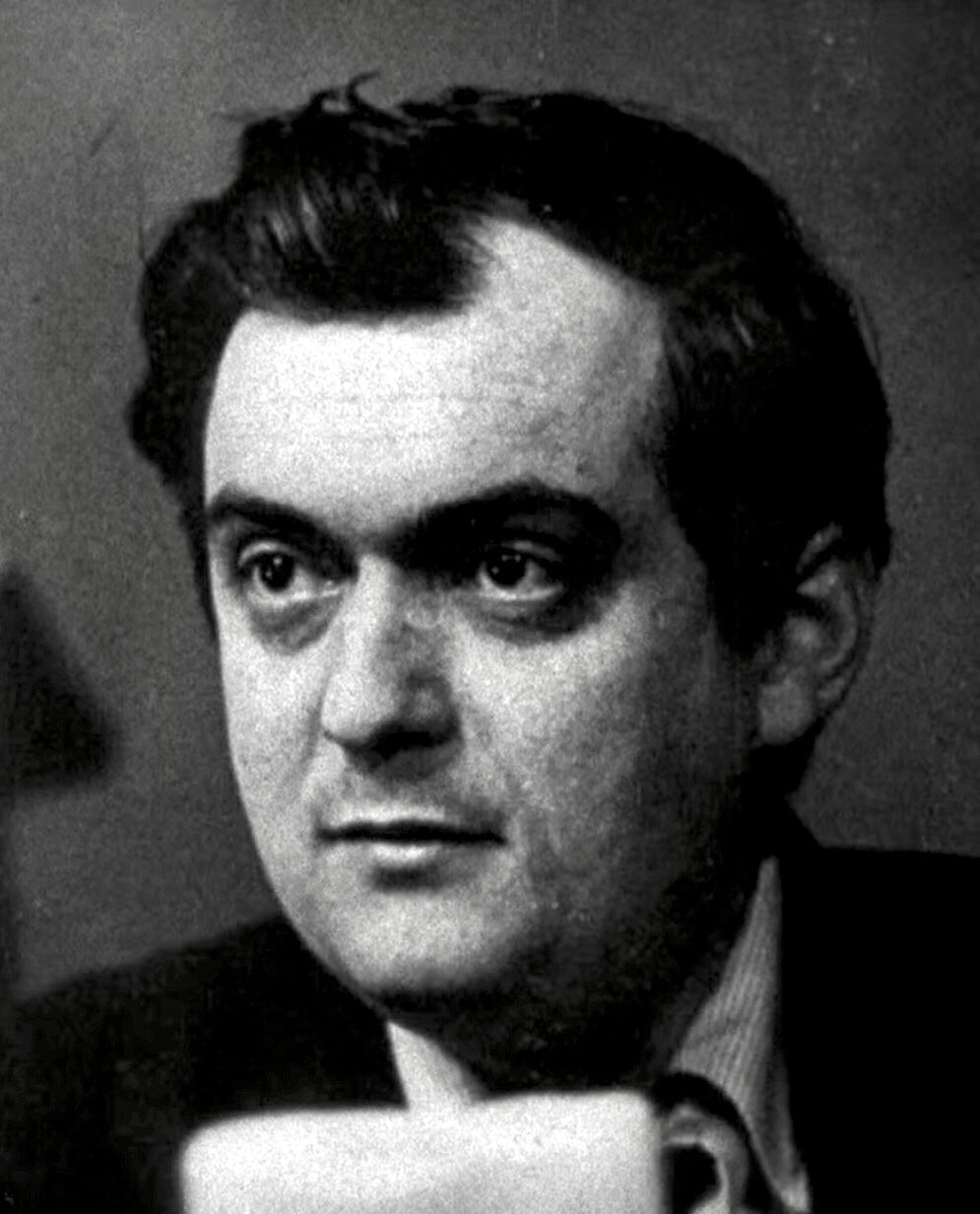
8. Birdman Ending Explained: Did Riggan Really Fly?
Washed-up superhero actor Riggan Thomson (Michael Keaton) shoots himself onstage during his Broadway debut, survives, and sees the play hailed as a triumph. Days later in the hospital, he climbs out the window onto the ledge. His daughter Sam rushes in, looks down, sees no body — then lifts her gaze skyward and smiles.
The magical-realism reading: Riggan really flew. Sam witnesses it — and the film’s opening levitation scene, presented as real, supports a universe where flight happens.
The tragic-realist reading: Riggan jumped and died. The hospital sequence — or just the flight — is his dying fantasy, and Sam’s upward gaze is grief, hope, or her choosing to believe his myth.
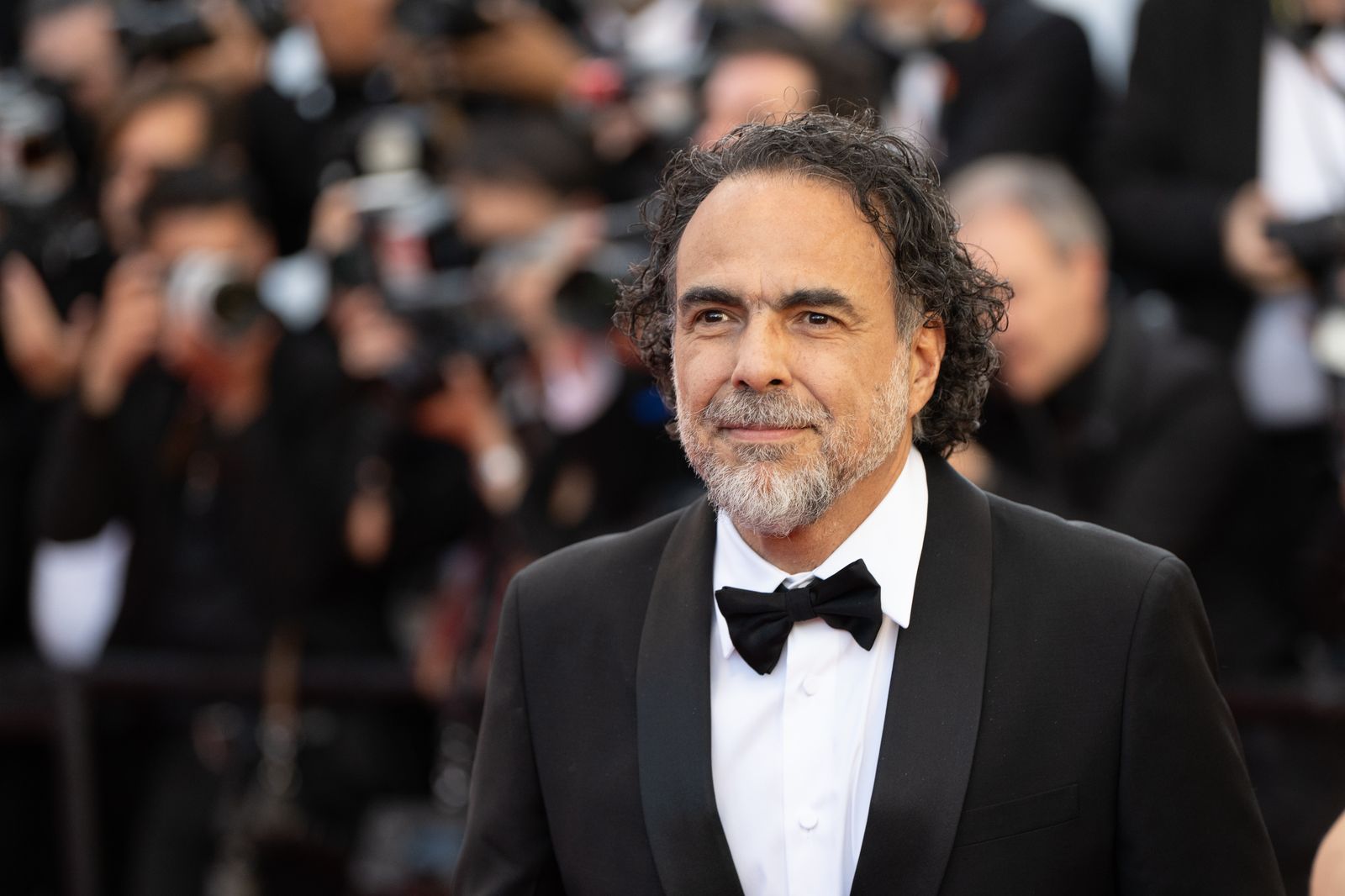
The crucial fact: the film never shows us what Sam sees. Director Alejandro G. Iñárritu has kept it deliberately open, saying the ending “can be interpreted as many ways as there are seats in the theater.” Treat any article claiming Iñárritu “confirmed” either reading as unreliable — a common trap in movie-endings-explained roundups. (Source: PrimeTimer)
9. Annihilation Ending Explained: What Are Lena’s Eyes?
Biologist Lena (Natalie Portman) enters the Shimmer — an alien zone that refracts DNA — and reaches the lighthouse where her husband Kane’s team died. A video shows the real Kane detonating a grenade in his own hands while his Shimmer-born double watches blankly. Lena destroys her own liquid-metal doppelganger, the Shimmer collapses, and she embraces the Kane double — only for her own eyes to shimmer with the same iridescent light.
The dominant reading: Lena is still herself, but permanently altered — refracted by the Shimmer the way Josie’s body became flowers. The glowing eyes signal mutation, not replacement.
The alternate reading: Lena was replaced by her double, and the real Lena died at the lighthouse. Critics are genuinely split on this one.
Director Alex Garland has said: “If someone comes up with a different interpretation, I don’t go, ‘That’s wrong.’ I go, ‘That’s interesting.'” The ending is unresolved by design. (Source: Far Out Magazine)
10. Blade Runner 2049 Ending Explained: The Snow and the Reunion
Replicant blade runner K (Ryan Gosling) learns he is not the “miracle child” after all. The child is a girl, Ana Stelline, whose implanted childhood memories K mistook for his own. A giant hologram ad of his AI companion Joi reciting his pet name “Joe” shows him that her love was just marketing copy. Freed from his chosen-one fantasy, K rescues Deckard (Harrison Ford) and delivers him to meet his daughter — then lies down in the snow to die as Deckard finally embraces Ana.
The dominant reading: the film rejects the “chosen one” trope. K’s heroism lies in choosing a selfless act despite being ordinary — a journey from obedient killer to someone who sacrifices himself for a real human connection.
The Joi debate: the giant ad reveals her affection as programmed pleasantry. A minority counter-reading argues Joi genuinely evolved beyond her programming — and K’s loss is real either way.
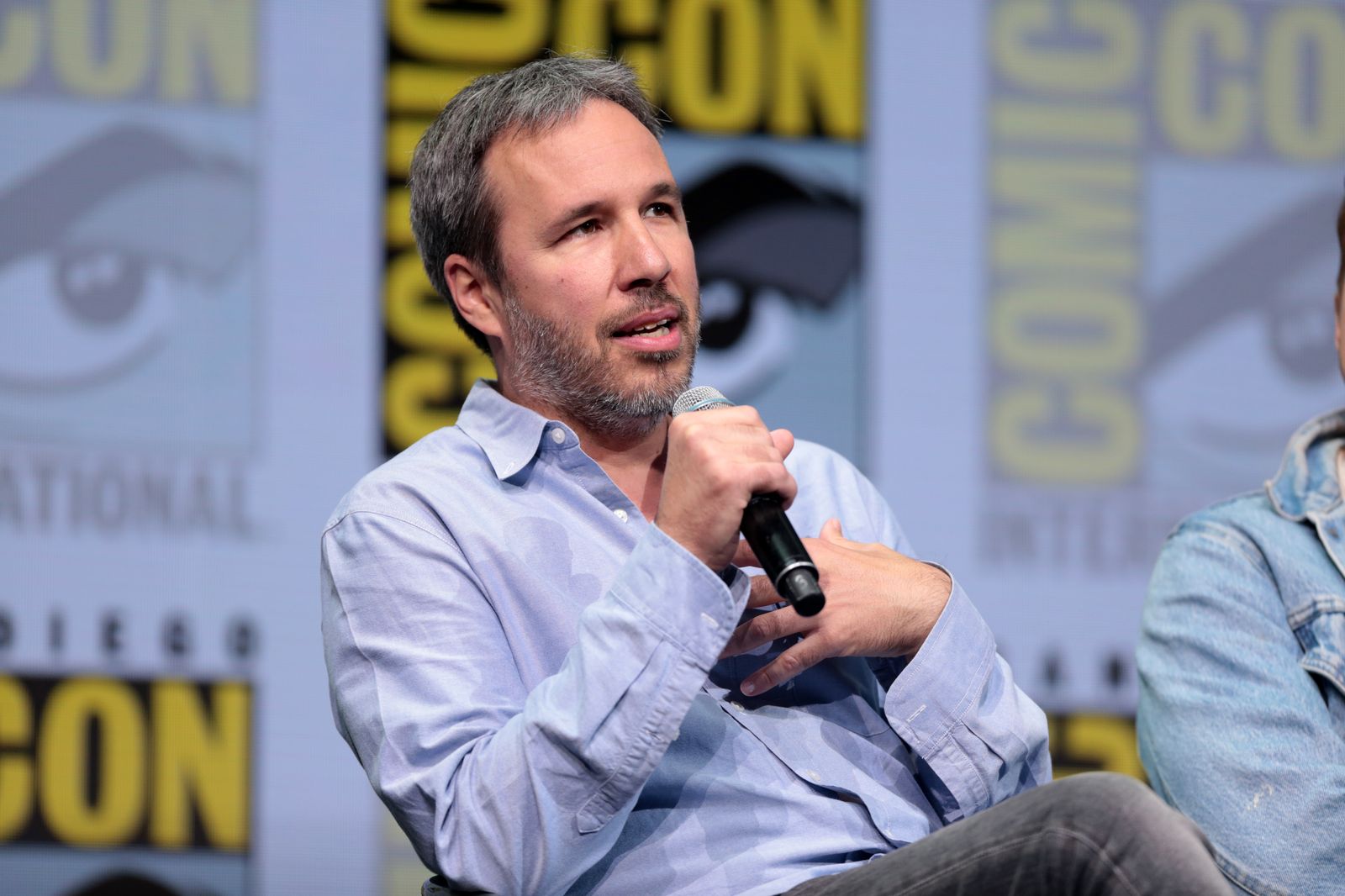
The Deckard question: the film deliberately preserves the original’s ambiguity — a genuine three-way split. Ridley Scott has repeatedly said Deckard is a replicant. Ford long maintained he is human, then softened. Director Denis Villeneuve refuses to adjudicate, saying he loves mysteries. A claim by Jared Leto that Villeneuve privately told him the answer is unverified; the answer was never disclosed. Screenwriter Michael Green said the wordless father-daughter reunion was the ending “from Minute One… the less said the better.” (Source: Collider)
Movie Endings Explained: Frequently Asked Questions
Do directors actually know what their movie endings mean?
Usually, yes — but they often refuse to say. Nolan’s philosophy is explicit: explaining an ending hands the audience one answer and kills every other reading. Lynch left his “10 Clues” for Mulholland Drive as the rare exception.
Which movie has the most confusing ending of all time?
There is no official answer, but these ten come up in nearly every fan debate. Inception’s spinning top, Mulholland Drive’s dream logic, 2001’s Star Child, and Donnie Darko’s tangent universe tend to top most lists. And the argument over Deckard’s humanity has been running since 1982 — the kind of confusion filmmakers dream of.
The Final Frame: Why Ambiguity Is Cinema’s Greatest Trick
Great movie endings explored — rather than merely explained — share a secret: the confusion is the gift. A definitive answer ends the conversation. A question that can never be settled keeps a film alive for decades. That is the bet behind every movie ending explained here: you will keep thinking about the last five minutes long after you forgot the rest.


