

Patrick Stewart's cause of death is now confirmed. His death certificate lists cardiopulmonary arrest and Lewy body dementia after his death at 86.
KEY FACTS
- Died: Wednesday, October 28, 2026, at his home in Los Angeles. He was 86.
- Official cause: Cardiopulmonary arrest and a neurocognitive disorder with Lewy body, per his death certificate. Alzheimer’s disease was also noted.
- Final arrangements: His remains were handled by alkaline hydrolysis, also known as water cremation, on November 3.
- Final role: Professor Charles Xavier in Avengers: Doomsday, in theaters December 18, 2026.
Patrick Stewart’s cause of death is now official. Weeks after the Star Trek legend died at 86, his death certificate confirms the medical details behind his passing. The document also reveals a quiet, personal choice his family made in the days after his death.
What Was Patrick Stewart’s Cause of Death?
The Los Angeles County Medical Examiner released Stewart’s death certificate this week. TMZ obtained the document first, and several outlets have since confirmed what it says. Parade reports that the certificate names the causes in full.
The certificate lists cardiopulmonary arrest and a neurocognitive disorder with Lewy body as the official causes of death. It also notes Alzheimer’s disease. In plain terms, Stewart died after a heart stoppage linked to a progressive brain disorder.
His family, however, had already shared the broad picture. On October 29, the day after his death, they announced that Stewart had died “following a brief and poignant journey with Alzheimer’s Disease and Lewy Body Dementia.” The certificate now puts the medical wording on the record.
Stewart died on Wednesday, October 28, at his home in Los Angeles. His family said he died in the loving care of his wife, Sunny, whom he married in 2013.
The document also reveals that his remains underwent alkaline hydrolysis on November 3. The process, often called water cremation, uses warm water and an alkaline solution instead of flame.
What Is Lewy Body Dementia?
Lewy body dementia is a progressive brain disorder. It also affects memory, thinking, and movement. It is one of the most common forms of progressive dementia in older adults. You can learn more about the condition from the Lewy Body Dementia Association.
The condition gets its name from abnormal protein deposits, called Lewy bodies, that build up in the brain. As a result, people can face changes in alertness, movement problems similar to Parkinson’s disease, and vivid hallucinations.
For example, early signs often include trouble with attention and planning, as well as disrupted sleep. There is no cure yet, but doctors can treat many of the symptoms.
Stewart never spoke publicly about his diagnoses. In fact, most fans had no idea he was ill. He kept working, and he kept taking on new roles, right up to his final months.
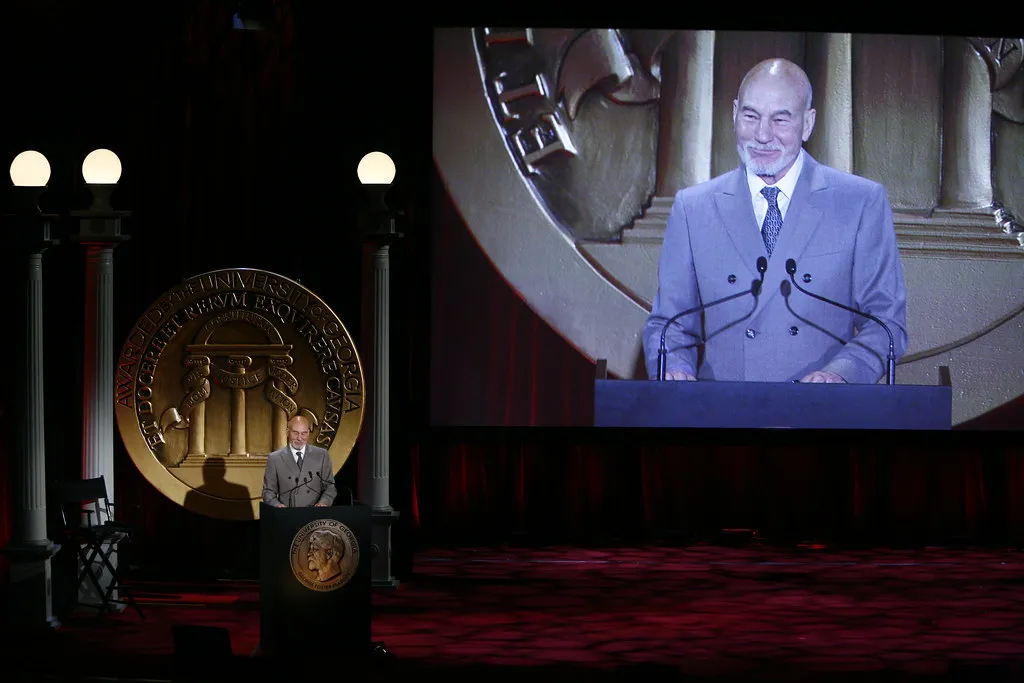
A Career in Five Acts
Stewart’s career ran for nearly six decades. It moved from classical theater to the bridge of the Starship Enterprise, and from there to the biggest superhero franchise on the planet. Here is how it unfolded:
| Year | Moment |
|---|---|
| 1940 | Born July 13 in Mirfield, Yorkshire, England |
| 1966 | Joins the Royal Shakespeare Company, where he spends 16 years |
| 1987 | Cast as Captain Jean-Luc Picard in Star Trek: The Next Generation |
| 2000 | First plays Professor Charles Xavier in X-Men |
| 2010 | Knighted by Queen Elizabeth II for services to drama |
| 2020 | Returns as Picard in the streaming series Star Trek: Picard |
| 2026 | Final screen role as Professor X in Avengers: Doomsday |
His Final Role: Professor X Returns in Avengers: Doomsday
Fans will see Stewart on screen one last time next month. He reprises Professor Charles Xavier in Marvel’s Avengers: Doomsday, which reaches theaters on December 18, 2026. CBR confirms the film will be his final performance.
The film brings several original X-Men stars into the Marvel Cinematic Universe for a major crossover. For Stewart, it also closes a circle that began in 2000, when he first played Xavier in Bryan Singer’s X-Men.
Meanwhile, Marvel is already looking ahead. The studio’s X-Men reboot will feature a new Professor X, played by Christopher Abbott. We covered the reboot’s new cast here. In other words, Doomsday is both a farewell and a handover.
Still, Stewart never planned to stop acting. He had said in a recent interview that he would never formally retire: “I can’t imagine ever officially ‘retiring.’ I’ll always and forever be an actor.” He added that he still received interesting offers and loved being challenged by new work.
Tributes Pour In for a Star Trek Legend
The tributes began within hours of the announcement. Sir Ian McKellen, his longtime friend and X-Men co-star, led them. William Shatner, Hugh Jackman, and Dame Judi Dench also shared their grief.

Two weeks after his death, his wife Sunny shared her own statement. She wrote about her profound grief and thanked fans for their love. Her words made clear how sudden the final chapter had felt, even for those closest to him.
What Happens Next?
First, Avengers: Doomsday arrives on December 18. It will give fans one final chance to see Stewart as Professor X on the big screen. Read our other Marvel coverage here.
Second, his death has renewed attention on dementia awareness. Lewy body dementia remains less widely known than Alzheimer’s, even though it affects many families. Experts say open conversation is one of the best tools for earlier diagnosis.
Finally, his legacy is secure. Picard and Professor X are two of the most beloved characters in modern screen history. For that reason, Stewart’s work will keep finding new audiences for years to come.
We covered Stewart’s passing in full when the news broke. Read our obituary for the full story of his life and career.
Sources
- Parade — Patrick Stewart’s cause of death revealed weeks after his death (death certificate details, via TMZ)
- CBR — Star Trek icon Patrick Stewart’s cause of death confirmed
- Just Jared — Patrick Stewart’s official cause of death revealed
- Hello! Magazine — Patrick Stewart’s cause of death revealed
- Lewy Body Dementia Association — About Lewy body dementia


