
Keffe D Sentenced to Life in Prison for Tupac Shakur’s Murder, Closing a 30-Year Cold Case
The Keffe D sentencing is over. And with it, one of music’s most famous cold cases has finally closed. On Tuesday, October 13, 2026, a Nevada judge sentenced Duane “Keffe D” Davis to life in prison without parole for the 1996 murder of rap legend Tupac Shakur. Davis, 63, was convicted of first-degree murder in August. He is the only person ever charged in Shakur’s death.
Judge Carli Kierny handed down the sentence in downtown Las Vegas, after Davis waived his right to a jury recommendation on punishment. Prosecutors had not sought the death penalty. But first-degree murder with a deadly weapon carries up to life without parole — and that is what he received. Davis sat quietly as the sentence was read, according to courtroom reports. His legal team says he will appeal.
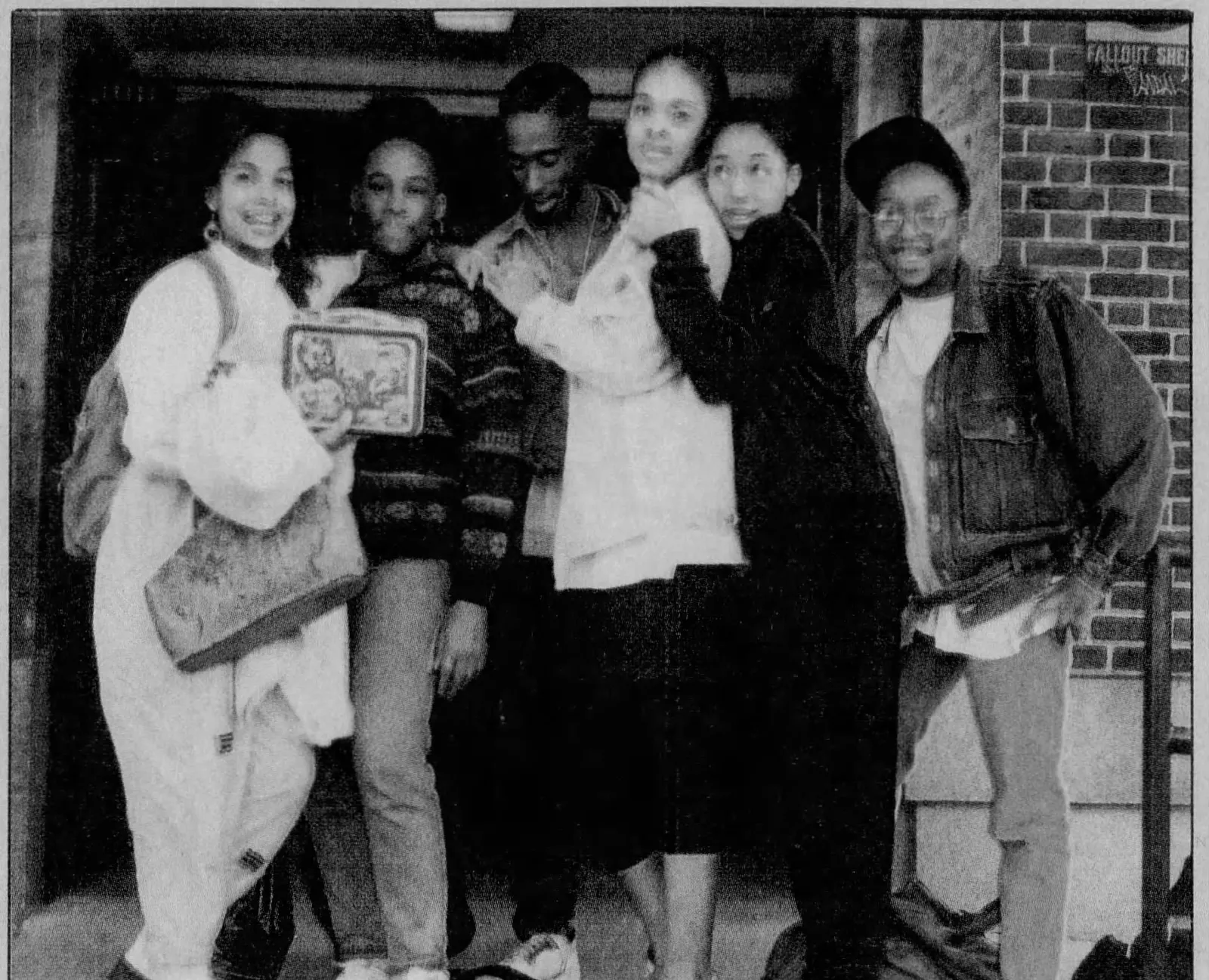
A young Tupac Shakur with friends at the Baltimore School for the Arts, 1988. (Public domain via Wikimedia Commons)
Tupac Shakur murder case timeline: 1996 to today
The Keffe D sentencing ends a three-decade legal saga. Here is how the case unfolded.
September 7, 1996: Shakur and Death Row Records co-founder Marion “Suge” Knight attend the Mike Tyson vs. Bruce Seldon fight at the MGM Grand. Earlier that night, Shakur and his entourage beat Davis’s nephew, Orlando “Baby Lane” Anderson, in the casino lobby. Later, the pair leave in a black BMW. At a red light near the Las Vegas Strip, a white Cadillac pulls alongside. Shots erupt. Shakur is hit four times.
September 13, 1996: Shakur dies at a Las Vegas hospital at just 25, six days after the shooting. Knight survives. The murder becomes one of America’s most notorious unsolved cases.
2019: Davis publishes a tell-all memoir, Compton Street Legend, describing his role in the shooting. He also gives media interviews and podcast appearances about that night.
September 29, 2023: Davis is arrested after a grand jury indicts him for first-degree murder. He is the only person ever charged in the case.
August 31, 2026: After an 11-day trial, a jury convicts Davis of first-degree murder with use of a deadly weapon. Jurors deliberate for only about three hours. Shakur’s sister, Sekyiwa “Set” Shakur, is seen crying and hugging prosecutors as the verdict is read.
October 13, 2026: Davis is sentenced to life in prison without parole. The case closes exactly 30 years and one month after the shooting.

The MGM Grand in Las Vegas, where the fatal confrontation began on September 7, 1996. (Photo: Tuxyso, CC BY-SA 3.0 via Wikimedia Commons)
How Keffe D’s own words became the prosecution’s star witness
The most striking feature of this case is how Davis was convicted: largely by his own admissions. Prosecutors argued that Davis, a former leader of the South Side Compton Crips, orchestrated the shooting as revenge for the beating of his nephew. They said he got the gun and handed it to a man in the back seat of the white Cadillac. Under Nevada law, a person who aids or helps a killing can be convicted of murder even without pulling the trigger.
The defense pushed back hard. Davis’s lawyers said his memoir and interviews were exaggerated stories told for money, publicity, or self-protection. They also claimed no physical evidence placed Davis in Las Vegas that night.
However, the jury was not convinced. After the verdict, Clark County District Attorney Steve Wolfson pointed to Davis’s years of public statements as the core of the case. As a result, the defense fell apart. Years earlier, Davis had spoken to detectives but avoided prosecution because of a deal with law enforcement. Once he began telling his story in public, that deal could no longer protect him.
What happens next: will Keffe D appeal?
Yes. Davis has already said he intends to appeal. Appeals in Nevada focus on whether the judge and jury followed the law, and whether new evidence has emerged. Meanwhile, Davis stays in custody. He is also the only one of the four men said to be inside the Cadillac who is still alive. As a result, his account of that night is now sealed into the historical record.
In addition, the Tupac murder sentencing shows how long justice can take. The case went cold for nearly three decades. It was only Davis’s decision to tell his story publicly that gave prosecutors the material to charge him.
Why Tupac Shakur’s legacy still matters
Shakur was one of the most influential and versatile rappers of all time, despite dying at 25. His music still resonates across generations. He earned six Grammy nominations in his short career. He was inducted into the Rock & Roll Hall of Fame in 2017. His film work showed an acting career that never got its full run.
The murder also shaped hip-hop culture. It deepened the infamous East Coast–West Coast rivalry of the 1990s. And it became one of the most talked-about tragedies in the history of music’s legendary rivalries.
For Shakur’s family, the sentence brings closure that took 30 years to arrive. For hip-hop fans worldwide, the Keffe D sentencing answers the question that haunted the culture since 1996. Someone has finally been held responsible for the death of Tupac Shakur.
Also read: Diddy Rushed to Hospital From Fort Dix Prison After Head Injury: What We Know